Mostrando entradas con la etiqueta Italia. Mostrar todas las entradas

jueves, 5 de mayo de 2011

Un cráneo revela al 'abuelo' de sapiens y neandertales (Italia)

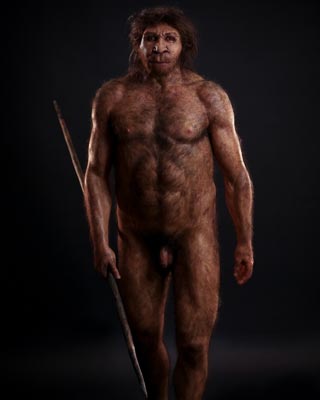
Uno de los mayores retos de la paleoantropología es encontrar al abuelo que compartieron humanos modernos y neandertales, identificar el ancestro común más cercano del Homo sapiens y el Homo neanderthalensis. Un linaje que podría llevar a ambas especies hasta una pequeña localidad al sur de Roma, Ceprano, donde en 1994 se encontró la parte superior del cráneo de un individuo adulto, entonces el resto europeo más antiguo recuperado hasta la fecha. Ahora, un grupo de investigadores de la Universidad de Roma y de la Unidad de Antropología Biocultural de la Universidad del Mediterráneo (Marsella, Francia) asegura que las características de ese cráneo lo emparentan tanto con sapiens como con neandertales.
Según el trabajo de estos investigadores, que ha publicado la revista PLoS ONE, el cráneo de Ceprano tendría en torno a 400.000 años y no los más de 800.000 años que se le llegaron a asignar inicialmente. Además, a partir de un detallado análisis comparativo junto con otros ejemplares pertenecientes al género Homo, el grupo francoitaliano ha optado por clasificar este cráneo dentro de la especie Homo heidelbergensis.
Hasta ahora, se había especulado largamente con la catalogación de este cráneo, muy difícil de atribuir. Distintos equipos lo han datado con fechas dispares, y una de las últimas investigaciones lo ubicaba como Homo antecessor, el Hombre de Atapuerca. Tal es la confusión que rodea al cráneo romano que se llegó a hablar de Homo cepranensis, definiendo a este hominino como perteneciente a una especie propia diferente a todas las demás.
Sin embargo, según el grupo de Aurélien Mounier y Giorgio Manzi, este robusto cráneo sin mandíbula pertenece a los heidelbergensis, una especie muy controvertida por la cantidad de fósiles con características muy dispares hallados por medio mundo.
El problema es el nombre
Es precisamente esta catalogación la que le chirría al codirector de las excavaciones de Atapuerca, José María Bermúdez de Castro. "La idea que propone este trabajo es muy interesante, no es para nada descabellada. El problema es el nombre, que no termina de convencer", afirma Bermúdez de Castro, que sin embargo no duda de la teoría de que el fósil italiano sea ancestro común de sapiens y neandertales.
"Parece que una maldición persigue a este pobre cráneo. El problema es que es muy difícil de datar, ya que se encontró en una cuneta, fuera de su contexto", lamenta el codirector de Atapuerca , que la semana pasada presentó los resultados de un estudio que dejan en el limbo de las especies al primer europeo, una mandíbula de 1,2 millones de años que originalmente se catalogó como antecessor. Bermúdez de Castro considera que el trabajo publicado en PLoS ONE va en la misma línea que el suyo: "Estos hallazgos nos están obligando a reinterpretar el escenario de las especies".

Fuente: Público: http://www.publico.es/ciencias/374382/un-craneo-revela-al-abuelo-de-sapiens-y-neandertales

lunes, 11 de abril de 2011

Bones of Leper Warrior Found in Medieval Cemetery (Italy)

The bones of a soldier with leprosy who may have died in battle have been found in a medieval Italian cemetery, along with skeletons of men who survived blows to the head with battle-axes and maces. Studying ancient leprosy, which is caused by a bacterial infection, may help scientists figure out how the infectious disease evolved. The find also reveals the warlike ways of the semi-nomadic people who lived in the area between the sixth and eighth centuries, said study researcher Mauro Rubini, an anthropologist at Foggia University in Italy. The war wounds, which showed evidence of surgical intervention, provide a peek into the medical capabilities of medieval inhabitants of Italy. "They knew well the art of war and also the art of treating war wounds," Rubini told LiveScience. Buried horses and bashed-in skulls The cemetery of Campochiaro is near the central Italian town of Campobasso. Between the years 500 and 700, when the cemetery was in use, Rubini said, the area was under the control of the Lombards, a Germanic people who allied with the Avars, an ethnically diverse group of Mongols, Bulgars and Turks. No signs of a stable settlement have been found near Campochiaro, Rubini said, so the cemetery was likely used by a military outpost of Lombards and Avars, guarding against invasion from the Byzantine people to the south. So far, Rubini said, 234 graves have been excavated, many containing both human and horse remains. Burying a man with his horse is a tradition that hails from Siberia, Mongolia and some Central Asian regions, Rubini said, suggesting that the Avars brought their death rituals with them to Italy. Rubini and his colleague Paola Zaio detailed three of these bodies in an article to be published in the Journal of Archaeological Science. The first man was about 55 when he died, the researchers found. They aren't sure what killed him, but they do know what he managed to survive: a blow to the head that tore a 2 inch (6 centimeter) hole in his skull. The pattern of the wound and the size of the hole suggest a Byzantine mace as the weapon, Rubini said. Almost as alarming, the man probably went through the medieval equivalent of brain surgery. The margins of the wound are smooth and free of fragments, Rubini said. "Probably the margins were polished with an abrasive instrument," he said. Whatever happened, the man survived his wound. The bone had begun to heal and grow before the man died, Rubini said. Body No. 2, another man of 50 or 55, painted a similar forensic picture. Judging by the shape of the wedge-shaped dent in the man's skull, Rubini said, he probably got in the way of a Byzantinian battle-ax. Like his comrade with the hole in the head, this man survived for a long time after he was wounded. View full size imageThe third soldier wasn't so fortunate, the researchers suspect. First of all, his bones show the telltale wasting and mutilation of leprosy, now known as Hansen's disease. In ancient times, leprosy sufferers were often banished from society. Apparently the Lombards and Avars took a more tolerant approach, Rubini said, because this man, who died around age 50, was buried in the cemetery along with the other dead. [Read: Earliest Known Case of Leprosy Unearthed] The leprosy sufferer's skull bears the mark of what Rubini and Zaio indentify as a sword slash. It may not have killed him, but the wound shows no signs of healing, suggesting the man died within hours of sustaining it. "The Avar society was very inflexible militarily, and in particular situations all are called to contribute to the cause of survival, healthy and sick," Rubini said. "Probably this individual was really a leper warrior who died in combat to defend his people against the Byzantinian soldiers." Whoever he was, the mysterious leper may help researchers understand how the disease evolved over time. Rubini and other researchers are working to extract the DNA of the bacteria that causes leprosy from bones found in the cemetery. The goal is to compare the medieval version of the disease to the bacteria alive today, Rubini said: "We study the past to know the present." Read More: Live Science: http://www.livescience.com/13607-bones-leper-warrior.html

martes, 5 de abril de 2011

Life and Death of an Etruscan Settlement (Italy)

Long pre-dating the Roman Empire, Italy was once inhabited by an advanced civilisation which greatly influenced the culture of Rome, the power that would eventually conquer them in the 3rd century and lead to the civilisation’s decline. With their origins shrouded in mystery, little evidence remains to tell the Etruscan story. Marsiliana d'Albegna © Association Etruria Nova Onlus However, the area of Banditella near modern-day Marsiliana offers some hope for Etruscan scholars, and has been associated politically and economically with the influential Etruscan city of Vulci. Excavations were first carried out in the area in 1908 by Prince Tommaso Corsini who successfully excavated over one hundred graves, and the discovery of the Marsiliana d’ Albegna tablet has been confirmed as the earliest abecedarian helping shed light on the language of these ancient people. Focussing on the land surrounding the resort of Maremma, the Marsiliana d’Albegna project – one of the largest archaeological excavations and research activities in Italy – is now entering its ninth season and aims to contribute to the knowledge and understanding of this important historic site and the people who inhabited it. Located near Grosseto in Tuscany, fieldwork is being undertaken under the direction of the Superintendent of Cultural Heritage of Tuscany, the Department of Archaeology and History of Arts at the University of Siena, and non-profit organisation Etruria Nova. This successful collaboration has led to the establishment of an international field school (see below), and has already produced extensive scientific data confirming the importance of the settlement. The Legacy of the Etruscan People At the beginning of the Iron Age, the Villanovan culture was an organic element of Etruscan society with no well-defined hierarchical structure, government or political borders. Distinct from Greek culture from which it drew profound influences, the Etruscan civilisation sprung to importance in the 8th century BCE at the end of which rich aristocracies began to emerge. Deriving influences from the eastern Mediterranean, this Orientalising period was marked by the importation of ceramics and metals. By the end of the 7th century BCE urban centres dominated the coastline with prolific expansion alongside agricultural development and mercantile activities. Reaching its height of power during the 6th century BCE when political organisation had evolved to 12 autonomous city states, the Etruscan influence spread from the Po Valley to Campania, encompassing ancient Rome. “After the conquest, the Etruscans were granted Roman citizenship and absorbed into Roman society, leaving few traces of their culture behind ”Despite evolving sea-faring power during the 5th and 6th centuries BCE which contributed to their defeat of the Focesi at Alalia in 514-535 BCE, followed by the invasion of Corsica, the period of stability and expansion radically changed for Etruria and its people. The 400s saw an era of colonisation, first by Hieron of Syracuse who defeated the southern coastal cities, shortly followed by increasing threats from the Alps. The beginning of the 4th century BCE saw Gallic tribes occupying areas of the Po Valley, which marked the end of Tyrrhenian domination of Northern Italy. This was swiftly followed by the Romans conquering a number of influential cities, leading to domination of Etruria during the 3rd century BCE when it ultimately fell to Rome. After the conquest, the Etruscans were granted Roman citizenship and absorbed into Roman society, leaving few traces of their culture behind. The Etruscan Mystery Having risen to prosperity and power, the disappearance of the Etruscan civilisation has left many questions within archaeology and academia regarding its origins and culture. The few examples of Etruscan writing left behind consist primarily of short tomb epigrams and genealogical information, and no works of Etruscan literature survived, if they even existed. the form of the Etruscan language and nature of right to left writings has often been used to identify the Etruscans as immigrants as it contains non indo-European elements that suggest an eastern origin ”Of that which has survived, the form of the Etruscan language and nature of right to left writings has often been used to identify the Etruscans as immigrants as it contains non indo-European elements that suggest an eastern origin. The Greek historian Herodotus believed that the Etruscans had sailed to Italy from Anatolia (now part of modern day Turkey) in around 800 BCE fleeing the famine that afflicted their homeland. Contrarily, Dionysius of Halicarnassus (circa 100 BCE) believed the Etruscans were indigenous to Italy and part of an ancient nation which did not resemble any other people with regards to language or customs. Certainly, some modern interpretations subscribe to this theory defining them as native Italic people who developed a separate culture owing to trade contacts. This theory is supported by evidence of gradual change within the archaeological record and the fact that there was no break in funeral traditions between the prehistoric inhabitants of Etruscan lands and the historical Etruscans, as well as the language bearing some resemblance to the Greek language form used in southern Italian Hellenistic colonies. Whilst some believe they were an ancient race from the heartland of present day Tuscany, others trace their origins to northern Europe, and recent DNA analysis suggests validation of the claims of Herodotus. The investigations at Marsiliana will help peel back the layers of the Etruscans’ mysterious past to finally establish a picture of their origins and customs. The Marsiliana D’Albegna Project Investigations and excavations have so far revealed the major discovery of the residential area of Marsiliana comprising of Poggio del Castello, Uliveto di Banditella and Poggio di Macchiabuia, an area totalling 47 hectares. The project has also uncovered a large tumulus on the Perazzeta plain dating to the 7th or 6th century BCE, alongside associated grave goods from this undisturbed tomb which have been fully restored for exhibition. Investigation of an Etruscan production site near the Albegna river site has also revealed transport amphorae dating from the 6th century BCE, as well as bucchero, coarseware and Etrusco-Corinthian ware. Survey has also identified a number of yet unexplored grave-sites within Corsini’s estate, which will assist in reconstructing the living and funerary practices of the Etruscan age, as well as cataloguing habitation and burial sites. Excavations this year will concentrate on the Necropolis of Macchiabuia and the Casa delle Anfore. Daily Etruscan Living (Casa delle Anfore) Between the late 6th and 5th century BCE the hills surrounding Marsiliana were covered with small production sites believed to be inhabited by families who were descended from the aristocracy that emerged during the Orientalising period. Investigation has revealed one site of particular interest dating to the last quarter of the 6th century BCE, the Casa delle Anfore, named for the proliferation of Etruscan amphorae discovered there. Studies of the pottery discovered within indicate occupation until the end of the 5th century. Situated within Corsini’s estate, the 400-metre square peripheral residence shows evidence of a perimeter wall containing an entrance to the east, and a central enclosed courtyard which opens onto at least seven separate rooms. Approximately two metres from the eastern perimeter lies what is believed to be an external courtyard area covered in pebbles, perhaps representing a large square or street. At the centre of this open courtyard a rectangular cavity covered in flakes of travertine was found, the function of which was possibly to collect surface water. Excavation of the rooms at the southeastern end of the residence revealed a large volume of tiles, pottery and Etruscan amphorae (most likely used for shipping) lining many of the walls at regular intervals. Cooking and food storage vessels were discovered amongst these fragments, and the lack of ceramic or tableware would suggest these rooms were used as food warehouses. Excavation of rooms at the front of the courtyard area along the eastern perimeter wall outside the building have shown a variety of large jars lined up along the walls of the rooms, probably covered by a roof. Scientific Analysis Sheds Light Chemical analysis has been carried out on samples of ceramic jugs, pottery and amphorae from the residential area to help understand the food produced and consumed by the Etruscans, and food practices in this area. A technique of gas chromatography-mass spectrometry was utilised to identify residues from a variety of cooking and storage vessels in situ. Results yielded indicators compatible with plant and animal origin, showing the presence of vegetable (possibly olive) oil, animal fats, bees wax and Pinaceae resin, with the majority of samples showing traces of fish indicating a possible storage of fish in oil. A sampling of the floor surfaces within the Casa delle Anfore was undertaken in order to determine the activities that may have been carried out within the residence using specialist software to generate a distribution map of organic compounds such as fatty acids, proteins and phosphates. Results from the internal areas of the residence showed lower densities and lack of surface traces left by food handling or consumption. Conversely, the outdoor areas demonstrated clear signs of active handling of food, as well as evidence of food spillages possibly from decanting contents in the vicinity of the storage vessels discovered. Funerary and Burial Practices (Necropolis of Macchiabuia) As a continuation of life on earth, the Etruscans placed great importance on the afterlife and constructed elaborate tomb structures which now dominate the region. The idea of the tomb being a house for the dead found its earliest expression in hut urns characteristic of the Villanovan period, evident on a large scale here. dating from the late 8th to early 7th century BCE, the Necropolis site of Macchiabuia consists of around 40 burial tombs of a similar style and type. The core of this funerary complex was identified in 2006 as the largest tomb of the necropolis, having previously been excavated by Tommaso Corsini. The tombs are characterised by a circular arrangement between four to nine metres in diameter of surface stones, made of roughly-hewn local stone. Within the centre of these stone circles the burial chambers, in the form of wooden structures, are housed in deep rectangular pits, surrounded by thin layers of stones acting as a ceiling and waterproof seal, with a tumulus of soil lined with clay serving to protect the burial. Single tombs were used for multiple depositions over time, and required secure access to allow for Etruscan burial rituals and customs to be maintained and carried out, whilst simultaneously deterring looters. The underground chamber where the deceased were interred could be reached through an entrance via a vertical wooden shaft which extended across the entire burial mound, closed on the surface by a large stone slab. Despite these measures tomb robbery has taken place over the centuries. The oldest excavated burial chamber (tomb four) unearthed two vessels containing the cremated remains of two individuals. Excavations of the tombs have also revealed a variety of grave goods alongside the burials. These included shards of jars and amphorae as well as locally produced brown and red mixing bowls found alongside the tip of an iron spear. Some of these bowls were decorated in geometric patterns allowing them to be dated back to the last decades of the 8th century BCE. These grave goods were organised by type and function, with jars and wine vessels concentrated along the longer edges of the tomb. Interpretation of the grave goods indicates that a man and a woman were interred within tomb four owing to the presence of a spear (associated with males) and the type of lid of one of the urns being primarily used for females. Inside tomb two, the remains of three individuals were discovered, two of which were cremated while the third was buried. The cremated remains are most likely one male owing to the shape of the urn in which they were found, and a woman as those remains appear to be associated with spinning and weaving tools. The human remains from the burial are possibly a very young girl. A variety of grave goods were discovered including weaving implements such as spools and thread and a glass spindle. Remnants of a fireplace were found against one of the short walls of the tomb above which was placed a bronze cauldron typically used in the boiling of flesh. Nearby next to the hearth is evidence of two iron spits, most likely for the use of roasting meats. Necropolis of Macchiabuia reconstruction © Association Etruria Nova Onlus The excavation and stratigraphic recording of these stone burial circles have enabled archaeologists and researchers to reconstruct and generate visual three-dimensional representations of the tombs, and further excavations will help to clarify the data. The artefacts from Macchiabuia have unfortunately been affected by large-scale deterioration including the collapse of one of the rooms, causing considerable fragmentation of ceramic and metal artefacts. This has been aggravated by infiltration of plants roots from above encroaching on the site. Climate and soil composition has further degraded the artefacts and has caused complete mineralisation of metal artefacts, which in some cases have been transformed into shapeless powder deposits. As a consequence of inadequate firing, many of the ceramics also appear extremely brittle and crumbly, and so their state of preservation has demanded sympathetic excavation techniques. The fieldwork and research at Marsiliana d’Albegna has begun to shed more light on the Etruscan people. The identification of some unexplored graves, as well as discovery of potential new sites, promises some interesting future excavations and the 2011 season will concentrate on the sites of Casa delle Anfore and Necropolis of Macchiabuia. ASSOCIATION ETRURIA NOVA ONLUS In 2009 the University of Siena, while retaining overall direction of the project, transferred management of the logistics to the Association Etruria Nova, a non-profit organisation formed by graduates of the university and archaeological experts. The collaborative contract between Etruria Nova and the Department of Cultural Resources has led to the establishment of an International archaeological field school. The school is open to students and graduates of Italian and foreign universities who intend to practice field archaeology, and also to volunteers interested in gaining experience in the area. Almost 180 people took part in the 2009and 2010 field schools with participants from eighteen countries. This endeavour increased awareness of the heritage of the Grosseto province and created a firm foundation for the development of informed cultural tourism and further research. Summer schools, workshops and activities 2011During the months of May and June there will be a new Archaeological Project in Southern Italy: In the land of Palinurus: In search of an ancient settlement of Magna Grecia 1st May – 26th June – Policastro Bussentino, Campania The region of the Enotri, in the Gulf of Policastro, revealed a series of ancient settlements which from earliest times had close contact with the Hellenic peoples living in the area now known as Magna Grecia. An important site developed here – linked in Virgil’s Eneid with Palinurus the navigator – whose origins are marked by a series of coins which refer to it as Pixous. The Association Etruria Nova, in collaboration with the Superintendent of Cultural Heritage in Campania, and the Council of Santa Marina, presents the First international Archaeological Research Season at Policastro, open to archaeology students and anyone interested in gaining experience in archaeological fieldwork. The season will include: 1. Archaeological excavation 2. Survey 3. Initial finds processing and site documentation. In May and June there will be three other initiatives: The Second International Introduction to Archaeology Field school 30th May to 12th June – The Etruscans at Marsiliana This initiative offers a series of lectures with practical workshop activities and on-site involvement. First International Introduction Course in Restoration 12th to 26th June 2011 – Processing of pottery and metal finds of the Etruscan Period The course will comprise two modules lasting one week each, and will include classroom instruction and practical restoration sessions, using pottery and metal finds from the 2010 season of excavations at the necropolis of Macchiabuia and the Casa delle Anfore. It is open to anyone interested in learning the basic theory and practice of restoration. The technical director is the conservator Dr. Alberto Mazzoleni. Theoretical tutorials will cover: 1. Archaeological restoration: techniques and methods 2. Taphonomy: decay and corrosion 3. Recovery through excavation: methods 4. Conservation: active and passive 5. Storage and display of finds: basic principles 6. Restoration of Etruscan pottery (cleaning and consolidation, methods and materials in reassembly) 7. Restoration of metals (cleaning techniques (chemical and mechanical), anti-corrosion treatment 8. Organisation of a restoration laboratory for pottery and metal finds The theoretical lectures will be complemented by supervised practical sessions First International Archaeobotanical Field school 26th June to 9th July – Detecting Cultural Landscape in Mediterranean Archaeology (DeCLaMA 2011) A traditional survey will be supported by a study of the ancient landscapes. Archaeological features are recurrent components of the Mediterranean cultural landscape yet are little understood. It may be a monumental centuries-old tree, or antique varieties of fruit trees and vines, or artefacts leading back to ancient uses of the land, such as terraces, charcoal-burning sites, or abandoned vineyards, olive-groves or chestnut orchards. This course offers theoretical and practical tuition in the rediscovery, evaluation and management of these parts of the cultural landscape. Participants will gain a new understanding of the use of cultural landscape in the innovative, multidisciplinary course, using the perspectives of botanists, archaeologists, geographers, managers and landscape architects. The Excavation Season 201128th August to the 30th October – Excavations will continue at the Necropolis of Macchiabuia and on the site of the Casa delle Anfore For more information (costs, accommodation etc.) and registration for the field schools contact: Associazione ETRURIA NOVA ONLUS, Vicolo S. Agostino, 12 – 53024, Montalcino (SI) tel. +39 (0) 577 600917 mobile +39 349 3613406 e-mail: info@etrurianova.org Website: http://www.etrurianova.org/ BIBLIOGRAPHY: A. Camilli et al., “Evoluzione e caratteri del paesaggio protostorico ed etrusco a Marsiliana d’Albegna(Manciano, GR)”, in N. Negroni Catacchio (a cura di), Paesaggi reali e paesaggi mentali. Ricerche e scavi, Preistoria e protostoria in Etruria, Atti dell’VIII Incontro di studi (Valentano-Pitigliano 2006), Milano 2008, pp. 195-210. A. Camilli et al., “Il Progetto Marsiliana d’Albegna: i caratteri del paesaggio etrusco in Maremma”, IN A. Ciacci, A. Zifferero (a cura di), Archeologia della produzione e dei sapori. Nuovi percorsi di ricerca in Etruria, Siena 2009, pp. 145-154. A. Camilli et al., “Manciano (GR). Marsiliana d’Albegna: nuovi dati dall’abitato e dal suburbio”, in Notiziario della Soprintendenza per i Beni Archeologici della Toscana,, 4, 2008, pp. 352-376. A. Camilli et al., “Nuove ricerche a Marsiliana d’Albegna: l’esplorazione archeologica della Tenuta Corsini”, in Notiziario della Soprintendenza per i Beni Archeologici della Toscana, 2, 2007, pp. 350-361. A. Camilli et al., “Nuove ricerche a Marsiliana d’Albegna: lo scavo in località Piani di Perazzeta”, in Notiziario della Soprintendenza per i Beni Archeologici della Toscana, 2, 2007, pp. 362-370. A. Minto, Marsiliana d’Albegna. Le scoperte archeologiche del principe don Tommaso Corsini, Firenze 1921. A. Zifferero, “Marsiliana d’Albegna (Manciano, GR): cento anni di ricerche archeologiche”, in F. Ghizzani Marcìa, C. Megale (a cura di), Materiali per Populonia, 8, 2009, pp. 223-246. A. Zifferero, et al., “Un sito artigianale con anfore da trasporto Py 3B a Marsiliana d’Albegna (Manciano, GR), in Officina di Etruscologia, 1, 2009, pp. 101-128. D. Calamandrei et al. “Aristocrazie etrusche. Nuove scoperte a Marsiliana d’Albegna”, in Terre del Vino, D. Calamandrei et al. “Circoli con camera ipogea e calatoia a Marsiliana d’Albegna. Prime ipotesi di ricostruzione”, in Materiali per Populonia, c.s. D. Calamandrei et al., “Etruschi nelle terre del principe”, in Archeo, 26, 2010, n.5, pp. 65-68. Giugno 2010, pp. 34-43. Read more: Past Horizons: http://www.pasthorizons.com/index.php/archives/04/2011/life-and-death-of-an-etruscan-settlement
Berlusconi abre sus brazos a la privatización del Coliseo romano (Italia)

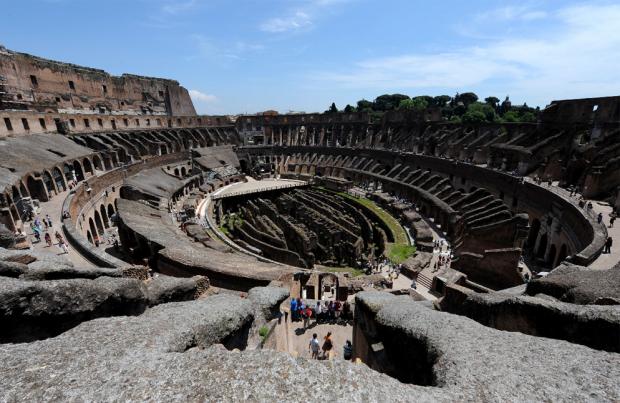
El gran Totò vendió la Fontana di Trevi en una célebre película de 1961, Totòtruffa. Medio siglo más tarde, el Gobierno de Silvio Berlusconi quizá haya superado la hazaña del cómico napolitano al poner el Coliseo, quizá el monumento más importante del mundo, en manos privadas. Los sindicatos han denunciado el acuerdo ante la Fiscalía de Roma El beneficiario es el empresario Diego della Valle, dueño de la empresa de zapatos Tod's, que a cambio de pagar el coste de los trabajos de restauración, 25 millones de euros, mantendrá durante 15 años prorrogables la exclusiva sobre la imagen mundial del monumento romano. Berlusconiano de primera hora, luego distanciado del primer ministro y ahora otra vez afín, Della Valle, que es también socio en los almacenes Saks y en RCS, el grupo editor de Corriere della Sera y de El Mundo, parece haber hecho uno de los mejores negocios de su vida. A cambio de sufragar los 25 millones que costará la restauración del anfiteatro del siglo I, Tod's gestionará en exclusiva los alquileres y los derechos de imagen del Flavio dentro y fuera de Italia, podrá poner su logotipo en las entradas y en los andamios, y construir un "centro de servicios" en el área arqueológica más protegida del mundo. El acuerdo fue firmado el 27 de enero pasado, y el Gobierno lo vendió con gran pompa como un acto de generoso mecenazgo por parte del emprendedor empresario del zapato. Curiosamente, el texto no se dio a conocer, y en gran parte todavía sigue siendo un misterio. El sindicato UIL, muy activo en el campo del patrimonio histórico y la cultura, ha presentado un escrito ante la Fiscalía de Roma y el Tribunal de Cuentas en el que expresa sus dudas sobre el alcance real del contrato y pide que se investigue si hay indicios de delito. Gianfranco Cerasoli, secretario general de UIL Cultura, explica que el acuerdo se firmó "a gran velocidad después de que el concurso oficial fuera declarado desierto", y recuerda que "impedirá durante al menos 15 años al ministerio, y por tanto al Estado, que según la Constitución es el responsable del anfiteatro, decidir libremente sobre el uso y la imagen del monumento". Además, según Cerasoli, "la valoración del acuerdo es evidentemente baja, ya que cualquier economista sabe que la operación generará como mínimo 200 millones de euros, porque concede a la empresa, mientras duren las obras, el plan de comunicación y la comercialización del Coliseo en todo el mundo". El sindicato aclara que no tiene nada contra Tod's. "Della Valle ha hecho su trabajo cerrando una operación comercial y promocional de gran impacto. No estamos contra los promotores privados sino contra las concesiones estatales a bajo precio". Una asociación mixta que debe ser todavía constituida, y en la que la empresa zapatera será dominante, tomará desde ahora las decisiones que afecten el monumento. Si alguien desea utilizar la imagen del Coliseo para rodar una película, un anuncio o hacer una campaña política, deberá pedir permiso a Tod's. Lo han tenido que hacer ya los responsables de Volkswagen, que pretendían presentar en el teatro romano un nuevo modelo. Fuentes de la empresa italiana han replicado a las críticas con un argumento sencillo: "Una empresa cotizada en bolsa que invierte 25 millones en restaurar un monumento debe explicar a sus accionistas ese comportamiento. Sería absurdo que Tod's no tuviese la exclusiva mientras duren las obras". El dueño de Tod's firmó el trato con el comisario del área arqueológica de Roma, el arquitecto Roberto Cecchi, apoderado por un decreto especial de la presidencia del Gobierno. Cecchi es uno de los nombres que el Ejecutivo emplea desde 2001 para acometer su "puesta en valor del patrimonio cultural". Su superior, Mario Resca, ex consejero delegado de McDonald's Italia, fue designado personalmente por Silvio Berlusconi para explotar los monumentos y museos con una visión comercial y privada. Según los críticos, una estrategia populista más, basada en considerar la conservación del patrimonio en una emergencia permanente (lo que ayuda a cerrar contratos a dedo). El objetivo declarado es lanzar acciones de gran impacto y aumentar las visitas. Mientras, se recortan los fondos públicos, se vacían las plantillas dedicadas al mantenimiento y se relaja el cuidado de los bienes artísticos e históricos. En paralelo, el Gobierno ha ido cediendo al sector privado buena parte de la gestión cultural y museística, desde la organización de exposiciones al negocio de las taquillas, un mercado restringido a un puñado de empresas que obtienen hasta un 30% de cada entrada vendida. Empresas como Electa Mondadori, propiedad del jefe de Gobierno italiano, han obtenido además concesiones públicas para las librerías de una treintena de instituciones, entre ellas la del Coliseo y el Foro Romano. En los últimos dos años, esa tendencia parece haberse exacerbado, lo que ha provocado tensiones y dimisiones entre los altos cargos culturales. Primero se marchó el número dos de Cultura, Salvatore Settis; luego su sucesor, Andrea Carandini, y finalmente el propio ministro, Sandro Bondi, que ha sido sustituido por el ex titular de Agricultura, Giancarlo Galan. Carandini acaba de rectificar, y está de vuelta en el ministerio después de que el Gobierno haya accedido finalmente a limitar los recortes del gasto previsto para este año sufragándolo con un aumento de un céntimo en el precio de la gasolina. Fuente: El País: http://www.elpais.com/articulo/cultura/Berlusconi/abre/brazos/privatizacion/Coliseo/romano/elpepicul/20110405elpepicul_2/Tes

lunes, 7 de marzo de 2011

Pompeii Couple Reunited in Marble Inscription (Italy)


A married couple from Pompeii have been reunited with the recovery of a missing piece of a 2000-year-old marble puzzle made of several inscribed fragments.
Broken apart and buried during the eruption of Mount Vesuvius in 79 A.D., the pieces belonged to a tomb inscription.
They were unearthed in 1813 along the Via dei Sepolcri in Pompeii near a burial tomb known as "Tomb of the Marble Door."
Still under construction at the time of the eruption, the tomb featured a door made of a single piece of marble, but carved to resemble the sort of folding wooden doors typical in Pompeian houses.
Although unfinished, the tomb had already been used for a number of burials.
"Most likely, the inscription had been displayed in some temporary fashion to be later embedded in the face of the tomb once the structure was completed," Peter Kruschwitz and Virginia Campbell at the University of Reading wrote in the journal Tyche.
But it never made it there. Smashed to pieces by the eruption, the inscription, or what remained of it, was stored in the huge deposits of the National Archaeological Museum of Naples.
Later reassembled by piecing together six fragments, it read: "L(ucius) Caltilius L(uci) l(ibertus) Coll(ina tribu) [P]amphilus [...]ae uxori [...]mo."
While four pieces referred to "Lucius Caltilius Pamphilus, freedman of Lucius, member of the Collinian tribe," two fragments contained the Latin word "uxori," indicating a wife.
Kruschwitz and Campbell identified the missing spouse by scrutinizing photographs of various fragments of inscriptions stored at the Naples museum.
"According to the original excavation report, the fragmentary inscription consisted of seven pieces of marble. The missing piece was in the same museum, but until now, has not been recognized as part of the same inscription," Campbell told Discovery News.
Containing nothing but the name of a female -- Servilia -- and the first part of a phrase, the fragment reads: "Seruiliae [...] amico anim [o ...]."
Although there are some other small pieces missing, the inscription is now legible and reads: "Lucius Catilius Pamphilus, freedman of Lucius, member of the Collinian tribe, for his wife Servilia, in a loving spirit."
After spending nearly 2,000 years apart, Lucius Catilius Pamphilus and Servilia were finally reunited.
"What makes the story so beautiful is the way the inscription was fragmented, with the name of the wife separated of that of the man, and the 'in a loving spirit' bit left with the wife's fragment," Kruschwitz told Discovery News.
Clearly an outsider to the Pompeian establishment, Caltilius Pamphilus was a former slave who took great pride in his status.
"You can see this by the way he displays his tribal affiliation in the inscription," Kruschwitz said.
The Caltilii family became fairly powerful at a slightly later phase of Pompeii, under the rule of Nero. It has been alleged that a man, Quintus Coelius Caltilius Iustus, a duovir of 52/53 A.D. (someone who embarked on a political career and became member of the governing body of the city) was indeed an offspring of this couple.
Giuseppe Camodeca, professor of Roman history and Latin epigraphy at the University of Naples "L'Orientale," agrees that the piece with the Servilia's name is the right one.
"I'm totally convinced about the juxtaposition," said Camodeca, who several years ago physically reassembled the first six fragments at the museum in Naples.

Fuente: Discovery News: http://news.discovery.com/archaeology/pompeii-vesuvius-inscription-110307.html

martes, 7 de diciembre de 2010

Otro muro se derrumba en Pompeya


Otro muro, aunque según las informaciones de los expertos oficiales de escaso valor arqueológico, se derrumbó ayer en Pompeya. Se trata de un muro del patio de la Casa del Moralista, que ya sufrió serios daños durante los bombardeos de la II Guerra Mundial.
El derrumbe, sin embargo, se suma al de la Casa de los Gladiadores (construida en piedra en el año 62), ocurrido el 6 de noviembre y que dejó en evidencia el estado de abandono de esta área arqueológica única en el mundo. Luisa Bossa, diputada del Partido Demócrata (PD), el mayor de la oposición en Italia, confirmaba ayer que se han derrumbado siete metros de la Casa del Moralista y, aunque su valor no sea tan importante, demuestra "las condiciones en las que se encuentra la zona". La superintendente de Pompeya, Janettee Papadopolus, y el director del recinto, Antonio Varone, han iniciado una inspección para evaluar los daños.

Fuente: El País
http://www.elpais.com/articulo/cultura/muro/derrumba/Pompeya/elpepucul/20101201elpepicul_5/Tes

jueves, 29 de julio de 2010

Roma busca 25 millones de euros para el Coliseo (Italia)


Roma busca 25 millones de euros para el Coliseo (Italia)

El Ayuntamiento de Roma y el Ministerio de Cultura de Italia han presentado este miércoles una convocatoria pública para buscar patrocinadores privados que financien parte de la restauración del Coliseo, valorada en 25 millones de euros.
El plan de trabajo, que pretende recuperar uno de los monumentos más visitados del mundo y el emblema de la capital italiana, contempla la restauración de las fachadas norte y sur del anfiteatro, las galerías y el hipogeo (galerías subterráneas).
Además, se mejorará el sistema de iluminación, se revisará la seguridad de las instalaciones sustituyendo las cancelas actuales por un nuevo modelo y se creará un centro de servicios de 1.500 metros cuadrados en el exterior del monumento que albergará taquillas, baños, librería y cafetería.
Para llevar a cabo estos trabajos se abrirá una convocatoria pública con la que se espera conseguir el apoyo económico de inversores privados que, a cambio, dispondrán de espacios en los que promover su imagen en las zonas inferiores del anfiteatro.
Los patrocinadores podrán presentar sus ofertas entre el 4 de agosto y el 15 de septiembre y los trabajos comenzarán previsiblemente en octubre.
"Este proyecto de restauración representa una transformación que abre las puertas a un nuevo mecenazgo, ya que pretende movilizar a las fuerzas privadas para que apuesten por el patrocinio", dijo en rueda de prensa el alcalde de Roma, Gianni Alemanno.
El mandatario explicó que el proyecto será "innovador pero no invasivo", ya que no se admitirán mensajes publicitarios con una dimensión superior a los dos metros de altura para no dañar la imagen del monumento.
Estos trabajos continuarán la línea marcada por las intervenciones que se han realizado este año en el monumento, valoradas por el Ministerio de Cultura en 2,5 millones de euros, y que permitirán abrir al público varias zonas que hasta ahora habían permanecido cerradas.
Está previsto que a partir del próximo mes de septiembre puedan visitarse las galerías subterráneas y el último nivel del anfiteatro, dos de los aspectos más desconocidos del Coliseo romano.
Durante el desarrollo de los trabajos de restauración, que tendrán una duración aproximada de dos años, el Coliseo permanecerá abierto con normalidad al público.

Fuente: El Mundo: http://www.elmundo.es/elmundo/2010/07/28/cultura/1280322175.html

martes, 22 de junio de 2010

Dionysian ecstatic cults in early Rome (Italy)

Dionysian ecstatic cults in early Rome (Italy)

A new doctoral thesis from the University of Gothenburg, Sweden, shows that, in contrast to traditional scholarly claims, Dionysian cultic activities may very well have occurred in archaic Rome in the decades around 500 BC.
A strong scholarly tradition rooted in the 19th century denies the presence of Dionysian ecstatic rites, cults, and satyr plays in Roman society. Although people in nearby societies evidently engaged in such behaviour around the same time in history, the Romans simply did not, according to early scholars. British scholars often stressed how much their people had in common with the Romans, not least as statesmen and colonists.
‘They even claimed that they had the same mentality. This perception is reflected in modern research on the Roman society and religion as well’, says the author of the thesis Carina Håkansson.
Religious research has also been influenced by the Christian tradition. For example Dionysian cults have had problems gaining acceptance as a ’real’ religion since the possibility that religion could ever be connected with bawdy behaviour and drunkenness has generally been rejected. This argument alone was enough to make early scholars neglect and reject the thought of Dionysian cult as religion proper.
Alternative interpretations
Our modern secularised view of the world offers alternative interpretations, and this is something Håkansson is eager to stress.
’However, there is no doubt that this secularised perspective will sooner or later be criticised and questioned – that’s the nature of research’, says Håkansson.
While Dionysos is associated mainly with the Greek region, various forms of wine gods were worshipped across the entire region of Greece-Etruria-Rome. Håkansson therefore uses findings from the Greek and Etruscan areas for comparative purposes.
Satyrs are strongly linked to the Dionysian cult, and Håkansson shows that satyrs presumably were present in archaic Rome, and furthermore formed a link between ritual and theatre/performance. Håkansson concludes that the Dionysian sphere in Rome may very well constitute the seed of the subsequent Roman dramatic tradition.
Cross-disciplinary theories and methods
The study is designed as a case study and is of a multidisciplinary nature; Håkansson used theory and methods from for example iconography, archaeology, philosophy and religious studies. The sources upon which the study is based include texts by the Roman historian Livius and the Greek writer Dionysius from Halicarnassus and iconographic material such as vase paintings and architectonic terracottas.
‘My thesis targets an international research association and aims at contributing to the debate on how a paradigm shift in religious research may change our view of the Romans and their contemporary society’, says Håkansson.

Fuente: Alpha Galileo: http://www.alphagalileo.org/ViewItem.aspx?ItemId=79085&CultureCode=en

martes, 1 de junio de 2010

Etruscan home 'unique discovery'


Etruscan home 'unique discovery'

Archaeologists have unearthed a beautifully preserved Etruscan house in western Italy in the first ever discovery of its kind. The 2,400-year-old building, uncovered at the archaeological site of Vetulonia near the Tuscan coast, is one of only a handful of Etruscan homes ever found. Nearly everything known about Etruscans has come from their extensive network of tombs. The remarkable condition of the house makes the discovery even more exceptional, say experts.
"These are the best remains ever found in Italy of an Etruscan home," explained Vetulonia Archaeological Museum Director Simona Rafanelli. "It is the only case of its kind in Italy. What we have found will enable us to reconstruct the house in its entirety.
"It offers a wealth of interesting new evidence".
Following an initial excavation of two weeks, the archaeological team revealed details of the earliest discoveries.
The building's walls were made of blocks of dried clay, the first ever example of Etruscan-made brick, said Rafanelli. Clay plaster was also found, along with a door handle and the remains of bronze furniture. Of particular interest is the basement of the house. Built of drystone this was apparently used as a cellar for storing food supplies. A massive pitcher which stood in the corner of the main room was used to hold grain.
Other finds include the original flooring of the house, made of crushed earthenware plaster, along with remains of vases, amphorae and plates painted black.
A large quantity of metal nails in the house, along with their placements, indicates the main room might have once contained a kind of mezzanine level built from wooden beams. Six Roman and Etruscan coins discovered on a small alter inside the structure suggest it collapsed in 79 BC, during a period of war sparked by the Roman general Lucius Cornelius Sulla.
Experts believe the building, which was used both as a home and for commercial activity, belonged to a wealthy and influential family at the time of its collapse. The variety of styles discovered so far indicates it was extended and renovated several times during its three centuries of existence. "The building was part of the ancient town of Vetulonia and is much older than other sections of the town uncovered so far," said Rafanelli. "We also want to work towards transforming this building into an open air museum," she added, promising the excavations would continue.

Fuente: Ansa.it: http://www.ansa.it/web/notizie/rubriche/english/2010/05/31/visualizza_new.html_1817923855.html

viernes, 28 de mayo de 2010

Visita a las entrañas del Coliseo


Visita a las entrañas del Coliseo

A finales del verano se abrirán al público las estancias donde se entrenaban los gladiadores y permanecían los animales antes de los espéctaculos del circo romano
Visitar uno de los monumentos más representativos de la Roma tendrá dentro de unos meses un nuevo aliciente. A partir de finales de verano, se abrirán al público el subsuelo del Coliseo, lugar donde se entrenaban los gladiadores y en el que permanecían los animales antes de los espectáculos, la arena del circo, varias de las galerías y la parte superior del monumento, que han permanecido cerradas durante varios años.
Junto a este anuncio, los conservadores del monumento han resaltado la necesidad de desarrollar un ambicioso proyecto de protección para paliar las agresiones que sufre el Coliseo, que recibe la visita de 6 millones de personas al año y recibe las vibraciones del tráfico de una de las principales avenidas de la ciudad.

Fuente: El País: http://www.elpais.com/articulo/cultura/Visita/entranas/Coliseo/elpepucul/20100527elpepucul_8/Tes

miércoles, 26 de mayo de 2010

Italy: Ancient Etruscan home found near Grosseto

Italy: Ancient Etruscan home found near Grosseto

Grosseto, 25 May (AKI) - An ancient Etruscan home dating back more than 2,400 years has been discovered outside Grosseto in central Italy. Hailed as an exceptional find, the luxury home was uncovered at an archeological site at Vetulonia, 200 kilometres north of Rome.
Archeologists say it is rare to find an Etruscan home intact and believe the home was built between the 3rd and 1st century BC.
Using six Roman and Etruscan coins uncovered at the home, archeologists believe the house collapsed in 79 AD during wars unleashed by Roman general and dictator, Lucio Cornelio Silla.
Archeologists have discovered a large quantity of items which have revealed a great deal about life in the home and the construction techniques of the era.
"These are the best ruins that have ever been found in Italy," said Simona Rafanelli, director of the Isidoro Falchi archeological museum in Vetulonia, told journalists.
"They represent something incredibly important from an archeological and historical point of view, because they finally give us an understanding of new techniques linked to Etruscan construction that we did not know until today.
"Here today we are rewriting history. It is a unique case in Italy because with what we have found we will be able to completely reconstruct the entire house."
From the ruins they discovered a basement or cellar in which the family is believed to have stored foodstuffs.
A beautiful earthenware pot was found in the corner of the room and an olive press.
Pieces of vases and plates were also uncovered at the house, while the walls were made of sun-dried clay bricks.

Fuente: Adnkronos International: http://www.adnkronos.com/AKI/English/CultureAndMedia/?id=3.1.444198950